Part3: Smart Scaling for SMEs: Why Financial Clarity Is the Fuel for Sustainable Growth

Clarity in Your Numbers = Confidence in Your Next Move 

Scaling a business is exciting—but without financial clarity, it can feel like sailing blindfolded. You may be moving fast, but are you headed in the right direction? 

In Part 2, we explored building strong operational systems. Now, it’s time to focus on something many business owners overlook: your financials. Because let’s be honest—if you don’t know your numbers, you can’t control your growth. 

Whether you’re crossing the six-figure threshold, entering new markets, or hiring your first team member, financial visibility is the difference between smart scaling and stumbling. 

Why Many Small Businesses Get Stuck When Scaling 

Most SMEs aren’t held back by lack of ambition—they’re held back by lack of financial visibility. 

Here’s how it shows up: 

  • You’re tracking too many metrics with no clear insights 
  • Decisions are based on gut instinct, not reliable data 
  • You’re unsure if your pricing is profitable—or competitive 
  • Cash flow problems appear too late to fix easily 

Sound familiar? You’re not alone—and you can fix it. 

3 Financial Moves to Help You Scale Smarter

1: Create a Clear, Visual KPI Dashboard

You don’t need to be a tech wizard or invest in expensive tools. Start by tracking the metrics that move the needle: 

  • Revenue Growth 
  • Gross Profit Margin 
  • Cash Flow 
  • Customer Acquisition Cost (CAC) 
  • Customer Lifetime Value (LTV) 
  • Lead Conversion Rates 

Pro Tip: If a number helps you make a better decision, it belongs on your dashboard. 

2. Monitor Cash Flow and Profit Margins Like a Hawk

Revenue growth is great—but what’s left after expenses? 

  • Review your cash flow weekly or monthly 
  • Know your break-even point inside and out 
  • Track profit per product or service—not just overall revenue 

Strong cash flow gives you freedom to grow without stress. 

3. Rethink Your Pricing Strategy—Often

Most SMEs underprice themselves—and it’s a silent killer of growth. 

Ask yourself: 

  • Is my pricing aligned with the value I provide? 
  • Am I staying “affordable” out of fear or strategy? 
  • Have my costs changed, but my pricing hasn’t? 

Smart pricing doesn’t just protect your profit—it strengthens your brand. 

Financial Clarity = Sustainable Growth You Can Trust 

When you know your numbers and understand what they’re telling you, you:

  • Make faster, more strategic decisions
  • Use your resources wisely
  • Stop second-guessing your next move 

And yes—you’ll probably sleep better too. 

What’s Next in This Series? 

In Part 4, we move from systems and strategy to your most valuable asset: your people. Because scaling without the right team? That’s just burnout waiting to happen. 

 About the Author
Nada Jamal is a Certified Advisory Board Chair and Business Strategy Specialist at Magnus Business Builder. She helps SMEs unlock profitable, sustainable growth through practical strategy, marketing, and leadership. 

#SmartScaling #BusinessFinance #FinancialClarity #SMEGrowth #PricingStrategy  

Part 2: Smart Scaling: Sustainable Growth Strategies for SMEs

Build Before You Grow: Operational Foundations That Scale 

How to streamline your systems and automate for clarity—not chaos 

Fast growth without a solid foundation is like building a house on sand—eventually, the cracks reveal themselves. 

In Part 1 of this series, we explored why sustainable growth starts with a mindset shift. Today, we move from mindset to mechanics—because if your operations can’t handle scale, growth won’t fix the problem. It will amplify it. 

Before you expand your offers, your team, or your customer base, ask yourself: 

Can my business handle more?

If the answer feels uncertain, this is your starting point. 

Why Operational Foundations Matter

When businesses grow without structure, the symptoms show up fast: 

  • Teams get overwhelmed 
  • Quality becomes inconsistent 
  • Communication breaks down 
  • Customer experience slips 
  • Leaders spend more time firefighting than leading 

If this feels familiar, you’re not alone—most SMEs hit this wall when growth outpaces systems. The solution isn’t to slow down your ambitions. It’s to build intentionally. 

3 Steps to Strengthen Your Operational Core

  1. Define Clear Roles and Accountability

Growth requires clarity—not just about what you’re doing, but who owns what. 

Without accountability, tasks fall through the cracks, deadlines slip, and decisions stall. 

Start with: 

  • An accountability chart (not an org chart—this focuses on responsibilities, not hierarchy) 
  • Role definitions with clear responsibilities 
  • Reporting lines and handover points
  • KPIs and success measures for each function 

Clarity eliminates duplication, confusion, and bottlenecks. 

 It also gives people the autonomy, confidence, and direction they need to perform at their best. 

  1. Streamline and Standardise Your Processes

Scaling shouldn’t make your business more complicated. 

It should make it more consistent. 

Begin by auditing your workflows: 

  • What’s manual that shouldn’t be? 
  • What’s broken or unclear? 
  • Where do tasks stall? 
  • What do customers repeatedly complain about? 
  • Where is the team reinventing the wheel? 

Then: 

  • Document your core processes with simple, repeatable SOPs 
  • Build training resources so new hires can onboard faster 
  • Use visual tools like Click UpNotion, or Miro to map workflows 

Your processes are your business’s instruction manual. 

Document them once, and they’ll support you forever. 

  1. Automate With Purpose

Automation isn’t just about saving time—it’s about unlocking capacity. 

But here’s the trap: many businesses automate chaos and end up scaling inefficiency. 

Instead, automate intentionally

  • Repetitive administrative tasks 
  • Customer onboarding and follow-ups 
  • Reporting and data collection 
  • Scheduling, reminders, notifications 

Use tools like: 

  • Zapier
  • HubSpot
  • Monday.com
  • Make.com

But remember: 

Don’t automate what requires human connection.

Sales conversations, client onboarding calls, and personalised support still benefit from the human touch. 

Let systems handle the routine so your people can focus on work that drives growth. 

Strong Foundations Accelerate Growth

It might feel counterintuitive, but slowing down to build your internal infrastructure is the fastest path to sustainable scale. 

With a lean, clear, and consistent operational engine, you can: 

✔ Scale without chaos 

 ✔ Onboard team members faster 

 ✔ Improve consistency across every touchpoint 

 ✔ Strengthen your customer experience 

 ✔ Reduce bottlenecks, overwhelm, and burnout 

Foundations aren’t overhead—they are your growth multiplier. 

Up Next in the Series 

Part 3: Build Before You Grow — Financial Clarity for Smarter Scaling

Because you can’t scale sustainably if you don’t understand the financial runway beneath your feet. 

Part1: Why Speed Alone Won’t Scale Your Business

Redefining Growth for Long-Term Success

In the world of business, “growth” is often synonymous with speed. Fast user acquisition. Rapid revenue jumps. Scaling teams overnight. But here’s the hard truth: speed without structure leads to burnout, breakdowns, and missed opportunities—especially for small and medium-sized enterprises (SMEs).

If your goal is to grow sustainably and profitably—not just survive a spike in sales—then it’s time to reframe what growth means.

Why Speed Isn’t the Ultimate Goal

Ambition is admirable. But scaling prematurely can cause more harm than good. You may find yourself:

  • Stretching operations too thin
  • Overwhelming your team
  • Losing track of your customer experience
  • Making reactive, short-term decisions

These are the warning signs of fragile growth.

What Does Sustainable Growth Look Like?

Sustainable growth isn’t loud or flashy—it’s strategic, consistent, and intentional. It strengthens the foundation of your business while increasing its capacity to scale without collapse.

✅ Operational systems that support growth

✅ Financial clarity to make informed decisions

✅ A team that’s empowered, not overwhelmed

✅ Customers who stay longer, buy more, and refer others

✅ Agility to evolve with the market

This isn’t about playing small—it’s about playing smart.

The 6-Part Framework for Scaling Smart

In this blog series, I’ll guide you through six practical strategies tailored to SMEs looking to grow with focus and resilience:

1️⃣ Get the foundations right

2️⃣ Know your numbers

3️⃣ Build a high-performing team

4️⃣ Focus on retention as much as acquisition

5️⃣ Diversify your growth channels

6️⃣ Measure, adapt, and evolve

These aren’t just tips—they’re the pillars of long-term success that I’ve seen transform real businesses across industries like IT, business services, construction, and engineering.

Ready to Rethink Growth?

If you’re an SME founder or leader chasing rapid results, pause and ask: Are we built to scale, or are we sprinting toward a ceiling?

Smart scaling starts with clarity, not chaos.

What’s been your biggest challenge in growing sustainably? I’d love to hear your experience—and your insights may help someone else in the same shoes.

Stay tuned for Part 2, where we dive into how to solidify your operational foundations for scalable success.

“Stay connected and never miss an update — follow us on social media!”

Fuel Growth with the Flywheel Effect

For years, the marketing funnel has been a trusted tool for business growth. It provided clarity, structure, and a reliable path—guiding prospects from awareness to purchase in a logical flow. Funnels helped countless businesses scale by optimizing each stage of the buyer journey.

And while funnels remain a valuable part of the marketer’s toolkit, the evolving customer landscape is inviting a new perspective—one that reflects the dynamic, interconnected nature of modern growth.


Why the Flywheel Approach Gains Momentum

The Flywheel Effect, championed by business strategist Jim Collins, offers a compelling model for sustainable growth. Unlike the linear path of a funnel, the flywheel represents a circular system, where every action feeds into the next—creating continuous momentum over time.

Here’s how it works:

  • Customer experience excellence fuels customer advocacy
  • Advocacy brings in organic referrals and trust
  • Reduced acquisition costs lead to reinvestment in service quality
  • Better experiences further increase customer satisfaction and loyalty
  • And the wheel keeps spinning—with less friction, more force

The brilliance of the flywheel is not in replacing the funnel—it’s in enhancing the overall system by focusing on retention, referrals, and ongoing value creation.


Next: Building a Strategy That Accelerates Itself

To activate your business flywheel:

✅ Focus on delight at every touchpoint—not just the sale

✅ Align marketing, sales, and service around a shared vision of growth

✅ Use feedback loops to optimize processes that drive repeat and referral business

✅ Track momentum metrics—like Net Promoter Score (NPS), repeat rate, and time-to-value

Think of it as shifting from campaign-based thinking to ecosystem thinking—where every department, decision, and customer contributes to growth velocity.


What This Looks Like in Practice

Imagine this:

  • A product update improves usability →
  • Customers share their improved experience on social →
  • Prospects engage with authentic feedback →
  • Your support team responds with insights →
  • Marketing amplifies the story, reinforcing trust →
  • More customers come in, and the cycle continues

Growth becomes less about “pushing harder” and more about “spinning smarter.”


So, What’s Next for Your Strategy?

The question for modern businesses isn’t whether to use funnels or flywheels—it’s how to integrate both intentionally.

Funnels help you attract and convert.

Flywheels help you retain, delight, and accelerate.

When you combine them, you build a system designed not just for one-time wins—but for long-term, self-sustaining success.


Ready to turn your strategy into momentum?

Let’s build the systems that keep growing—even when you’re not looking.


Strategic v tactical planning

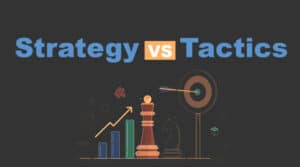
Strategy and tactics are at times confusing as they go hand-in hand. Having one without the other is counterproductive. A strategy is an overarching goal, vision or direction a business is looking to take. Whilst tactics are the daily, weekly and monthly actions that a business will use to achieve their goals. 

For every strategy, there can be many tactics. Here are examples of some of them. 

The Strategy  

To focus on building strong relationships with customers by understanding their needs and providing excellent customer service and staying in regular contact to maintain the relationship. 

The tactics would be based on the form of communication that you use, is it via email, telephone, face-to-face, in person. The frequency and language. 

  • Active Listening: Train your customer service team to actively listen to customers during interactions. Encourage them to ask open-ended questions to understand the customer’s needs and preferences better. 
  • Customer Surveys and Feedback: Regularly solicit feedback from customers through surveys or feedback forms. Analyse the data to identify areas for improvement and address any concerns promptly. 
  • Personalization: Use customer data to personalize your interactions. Address customers by their names, recommend products or services based on their past purchases, and tailor your communication to their preferences. 
  • Timely Responses: Respond to customer inquiries and issues promptly. Establish clear response time goals and meet or exceed them consistently. 
  • Social Media Engagement: Engage with customers on social media platforms by responding to comments, messages, and mentions. Address both positive and negative feedback publicly to demonstrate your dedication to customer satisfaction. 


The Strategy 

Leverage social media platforms, such as LinkedIn, Facebook, Instagram etc. To build brand awareness, engage with potential customers and promote your products and services. 

The Tactics will depend on your content. Will you using storytelling to connect with potential customers or to illustrate how your products or services have helped other customers? Will your content be educational to build credibility? Will you use testimonials? What Images will you use, if any? How often will you post.  

These tactics would vary based on the platform. 

  • Optimize Your Company Page: Create a professional and compelling LinkedIn company page. Use high-quality images, a clear description of your business, and relevant keywords to help users find your page. 
  • Publish Engaging Content: Share informative and valuable content related to your industry, products, and services. Focus on thought leadership and providing solutions to common problems your target audience faces. 
  • Participate in Groups: Join LinkedIn groups relevant to your niche and actively participate in discussions. Be helpful, offer insights, and avoid overtly promoting your products to build credibility. 
  • Engage with Your Audience: Respond promptly to comments, messages, and reviews. Encourage discussions and user-generated content to foster a sense of community around your brand. 


The Strategy 

To expand your product or service offerings, to meet the evolving needs of your customers. This can help to differentiate your business and provide additional value to customers. 

Your tactics would be based on how you market and promote these to your customers 

  • Email campaigns: Create targeted email campaigns to announce your new offerings, offer special deals, and keep your audience informed about updates. 
  • Organize webinars or live demos: Showcase your new products or services in action. Interact with the audience, answer questions, and address their concerns directly. 
  • Encourage customers to try out your new offerings: Provide limited-time discounts or exclusive deals to early adopters. 
  • Invest in high-quality images and videos: To showcase your new products or services. Visual content is more engaging and memorable than plain text. 

What is your latest strategy and which tactics will you be utilising to achieve your objectives? 

Nada Jamal 

Marketing and Business Strategy Specialist 

Leadership Alignment: The Cornerstone of Sustainable Business Growth

In every successful business story, there’s one often-overlooked factor driving the momentum: aligned leadership. Behind every high-performing organization is a leadership team that speaks with one voice, moves with clarity, and rallies around a shared purpose.

But when leadership misalignment creeps in, cracks form—slowly at first, then suddenly. Strategies falter. Culture frays. Teams spin in different directions. And even with the best ideas on paper, results fall short.

Why Leadership Alignment Matters More Than Ever

In a fast-changing business environment, alignment isn’t just about harmony—it’s about agility and execution. When executives are aligned, decisions are made faster, initiatives stay on track, and teams operate with a sense of clarity and confidence. But when leaders pull in different directions—even subtly—confusion trickles down the chain. Teams second-guess priorities. Silos form. Progress stalls. And worst of all? Talent walks.

6 Ways to Create Lasting Leadership Alignment


1. Anchor in a Shared Vision

Alignment starts with purpose. Leadership teams need more than agreement on goals—they need emotional investment in the company’s mission and values. Without that shared “why,” even tactical alignment won’t last.

2. Communicate Beyond the Bullet Points

Weekly meetings are fine—but alignment thrives on ongoing, honest dialogue. Encourage regular, unscripted conversations among leaders to discuss priorities, challenges, and shifting conditions.

3. Break Down Silos with Shared Accountability

Real alignment means shared success. That means aligning KPIs across functions, fostering cross-departmental collaboration, and rewarding leaders for joint outcomes—not just individual wins.

4. Normalize Healthy Conflict

True alignment isn’t forced consensus—it’s rigorous debate followed by unified execution. Create space for challenge, knowing it sharpens thinking and deepens commitment.

5. Model Unity, Especially in Tough Moments

When leaders stand together—especially during high-stakes decisions—it signals stability and integrity. That unity cascades down, fostering trust throughout the organization.

6. Invest in Leadership Cohesion

Like culture, alignment is built over time. Consider executive coaching, team development workshops, and leadership retreats to nurture the bonds and behaviours that drive cohesion.

Final Thought: Alignment Is a Leadership Discipline

Leadership alignment isn’t just about feeling “in sync.” It’s a discipline—one that requires intention, effort, and care. But the payoff is enormous. When leadership is aligned, your business doesn’t just grow—it grows with purpose, pace, and resilience.

“Strategic planning is worthless, unless there is first a strategic vision”

“Strategic planning is worthless, unless there is first a strategic vision”

John Naisbitt

Strategic planning creates a common understanding of what an organisation wants to achieve and what it needs to do to achieve it.

The key elements of a strategic plan will include:

The organizations vision, which articulates where the organization wants to be and the mission, which is how it will achieve it. The plan links the two and needs to agile and adaptive enough to respond if the context changes during the execution.

To build a successful plan leadership should scope for trends and disruptions and assess their impact on the organization’s goals.

Poor plans can lead to poor execution. A rigorous strategic planning design effectively translates the strategy into plans that can be executed and implemented.

Let’s look at some examples where you can be strategic and plan accordingly within your business.

  • Launching a new product to attract a broader customer base or perhaps expansion into new geographical territories or markets.
  • Streamlining internal processes to reduce operational costs, or investing in technology to improve efficiency
  • Implementing a Customer Relationship Management system to provide personalised services to customers
  • Implementing a training and development program for employees and fostering a positive workplace culture to attract and retain skilled people

Identifying potential acquisition targets through market

  • analysis and condusting due diligence to assess compatibility and risk.

Strategic planning is a systematic process that empowers an organization to realize its goals and objectives. This multifaceted approach intertwines thorough analysis, decisive decision-making, and judicious resource allocation, strategically positioning the organization for sustained success in the future.

Thank you for reading my latest article. Feel free to reach out if you would like to help in achieving your goals and objectives.

Nada@magnusbusinessacademy.com

www.magnusbusinessbuilder.com


https://www.linkedin.com/pulse/strategic-planning-worthless-unless-first-vision-nada-jamal-tidbc

I believe that developing a successful mindset for business success is akin to erecting a multi-level building.

That starts with having a solid foundation, which will withstand the environmental forces. It starts with your purpose? Why do you do what you do. Why did you start your own business?

Be clear with your goals – What do they look like, what day, month, year will you achieve them? How will you feel? How will you celebrate. As with a building, it does not just appear out of now nowhere.

It needs to be designed with detailed drawings–how many of floors, doors, and windows will it have? What materials will be used, right down to the location of the power ports, and the list goes on. Are your goals written down and mapped out where you can see and track them daily?  The clearer you are with you goals the more likely you are to achieve them.

How committed are you to your goals, do they align with your why. They must be your goals and no one else’s. When we commit, obstacles can be overcome, and solutions are easier to come by

Surround yourself with people that will lift your energy levels, people that want you to succeed in your personal and professional life. Unfortunately, sometimes those people are family.

As with erecting a building, who will you enlist to help you build it? You have this vision which you have committed to, who will you trust to help you realise it. Will you look to the doubters, the people who constantly create obstacles, which lead to lengthy delays in you achieving your goals.

Buildings need regular maintenance, if they not maintained, they fall into disrepair and when that happens. Overtime, existing tenants will complain, and any new tenants will refuse to pay rental premiums and go elsewhere.

 Focus on your strengths – write them down and keep them where you can see them every day.

Use forward moving words – like Can instead of Can’t. Think about the words that you tell yourself.

Try Reframing – its simply shifting an unresourceful thought or sentence into a resourceful one.

Challenge yourself, do something different and learn something new, this helps to build your confidence and resilience.

A healthy and successful mindset is a constant work in progress, it requires ongoing maintenance.

https://www.linkedin.com/pulse/foundations-business-success-start-you-nada-jamal-rcksc

Strategic v tactical planning

Strategy and tactics are at times confusing as they go hand-in hand. Having one without the other is counterproductive. A strategy is an overarching goal, vision or direction a business is looking to take. Whilst tactics are the daily, weekly and monthly actions that a business will use to achieve their goals.

For every strategy, there can be many tactics. Here are examples of some of them.

The Strategy

To focus on building strong relationships with customers by understanding their needs and providing excellent customer service and staying in regular contact to maintain the relationship.

The tactics would be based on the form of communication that you use, is it via email, telephone, face-to-face, in person. The frequency and language.

  • Active Listening: Train your customer service team to actively listen to customers during interactions. Encourage them to ask open-ended questions to understand the customer’s needs and preferences better.
  • Customer Surveys and Feedback: Regularly solicit feedback from customers through surveys or feedback forms. Analyse the data to identify areas for improvement and address any concerns promptly.
  • Personalization: Use customer data to personalize your interactions. Address customers by their names, recommend products or services based on their past purchases, and tailor your communication to their preferences.
  • Timely Responses: Respond to customer inquiries and issues promptly. Establish clear response time goals and meet or exceed them consistently.
  • Social Media Engagement: Engage with customers on social media platforms by responding to comments, messages, and mentions. Address both positive and negative feedback publicly to demonstrate your dedication to customer satisfaction.


The Strategy

Leverage social media platforms, such as LinkedIn, Facebook, Instagram etc. To build brand awareness, engage with potential customers and promote your products and services.

The Tactics will depend on your content. Will you using storytelling to connect with potential customers or to illustrate how your products or services have helped other customers? Will your content be educational to build credibility? Will you use testimonials? What Images will you use, if any? How often will you post.

These tactics would vary based on the platform.

  • Optimize Your Company Page: Create a professional and compelling LinkedIn company page. Use high-quality images, a clear description of your business, and relevant keywords to help users find your page.
  • Publish Engaging Content: Share informative and valuable content related to your industry, products, and services. Focus on thought leadership and providing solutions to common problems your target audience faces.
  • Participate in Groups: Join LinkedIn groups relevant to your niche and actively participate in discussions. Be helpful, offer insights, and avoid overtly promoting your products to build credibility.
  • Engage with Your Audience: Respond promptly to comments, messages, and reviews. Encourage discussions and user-generated content to foster a sense of community around your brand.

The Strategy

To expand your product or service offerings, to meet the evolving needs of your customers. This can help to differentiate your business and provide additional value to customers.

Your tactics would be based on how you market and promote these to your customers

  • Email campaigns: Create targeted email campaigns to announce your new offerings, offer special deals, and keep your audience informed about updates.
  • Organize webinars or live demos: Showcase your new products or services in action. Interact with the audience, answer questions, and address their concerns directly.
  • Encourage customers to try out your new offerings: Provide limited-time discounts or exclusive deals to early adopters.
  • Invest in high-quality images and videos: To showcase your new products or services. Visual content is more engaging and memorable than plain text.

https://www.linkedin.com/pulse/strategic-v-tactical-planning-nada-jamal

Yes, you can run and grow a successful business

Running and growing a successful business requires dedication, determination, commitment, and effort. It also requires having a growth mindset. What is a growth mind-set and how do you achieve it? I am sure you have heard this term used before. A growth mind-set is having vision, a vision for where you want your business to be in the future and working towards achieving it.

What is your vision? You may want to sell or create a legacy business, you may want to be the number 1 in your industry in your region, country or even the world.

Once you have worked out your vision, you want to then work out how to get there. This is where strategic planning comes in.

Your Strategic Plan will include your current situation, your strategic objective – what you want to achieve and how you will get there. I find the optimum length for a plan is 18-months or 3 years. Some businesses have a 5-year plan. This is too long. Covid-19 and its effects have shown us, how unpredictable our world can be. Having a plan does not guarantee success, ideally you want to review your plan every 6 months. Remember it is a working document.

Implementation is just as important as planning; this is where I find, most plans fail. No matter how great your plan is, it needs to be implemented correctly. Before implementing your plan, you will need to work out what resources are needed, assign tasks and projects to your team, develop a schedule. Running regular me

eting updates will help you to keep track and allow you to make the necessary changes as required.

Systemization of your business will enable efficiencies and allow you to focus on growing your business rather than working in it. That is the whole objective, isn’t it?

Processes and procedures will not only create efficiencies, but they will also ensure that your business is compliant and transparent. Having processes in place for the operational aspects of your business, reduces risk. Other benefits include consistency, repeatability, and transferability. These last three benefits lead to a positive impact your team. I will elaborate further, by having processes in place, your staff know how to perform certain tasks and any new people that you hire will also know what the what, where and how and help them in the initial onboarding phase.

 People are the most critical component of business success. They are now more important than ever. Every business is experiencing a shortage in skilled people. Having a Workforce Plan is now more important than ever. A workforce plan that includes attracting, recruiting, onboarding, engaging, managing performance, staff development and letting go staff members. Also crucial to this is, work culture. Culture starts at the top; it starts with you. What type of culture do you have? Are you happy with it? Can it be improved or changed? The answer is, yes, you can change it. Which leads us to leadership.

Leadership can be developed. I find as a Business Owner, it can be lonely, we are expected to know everything, we are good at giving feedback. Who is there to give us feedback on our performance? I would recommend developing a questionnaire for your staff to provide their feedback on your leadership. This will not only help you to find out how you are perceived by them, but will also enhance work culture and communication

Finance, without money there is no business. Many businesses go broke, not because they do not have an excellent product, staff, or all of what I just covered, but because of poor financial management. Keeping on top of cash lows, knowing what your pricing is and break-even point. Keeping records of all incomings and outgoings. If finance is not your strong point, having a bookkeeper help you with your books and an astute Accountant to provide tax and other financial advice.


https://www.linkedin.com/pulse/yes-you-can-run-grow-successful-business-nada-jamal-1c